Menu
Suggested Searches
Recent Searches
Suggested Searches
Product Ratings
Resources
Chat With AskCR
Resources
All Products A-ZThe payment for your account couldn't be processed or you've canceled your account with us.
Re-activateMy account
Sign In
My account
Sign In
Media Room
Release date 04/03/2012
YONKERS, NY — Balancing strength and softness is often the biggest challenge for toilet paper, but White Cloud 3-Ply Ultra Soft and Thick (Walmart) proved that one product can have it all in Consumer Reports’ latest Ratings of toilet paper. Twenty-five varieties of toilet papers were tested for strength, softness, tearing ease and disintegration and products with “green” claims often made trade-offs between these features.
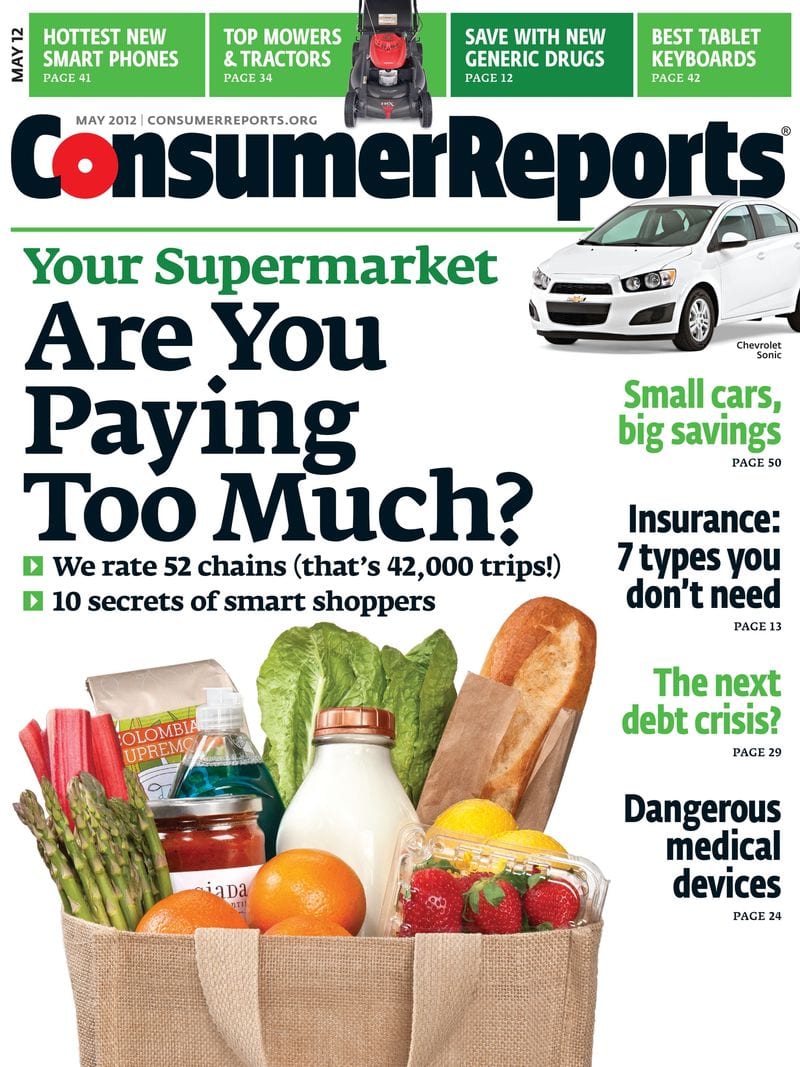
The full report on toilet paper, which features the complete Ratings, tips on how to choose, and products that have been downsized, is available in the May issue of Consumer Reports and online at www.ConsumerReports.org.
“When it comes to toilet paper, people want softness, but they don’t want it ripping apart in their hand,” said Celia Kuperszmid Lehrman, deputy home editor for Consumer Reports. “There were only a few brands that stood out in our tests and offered softness and strength.”
In Consumer Reports’ tests, Walmart’s White Cloud 3-Ply Ultra Soft and Thick beat out the second-highest scoring toilet paper, Quilted Northern Ultra Plush, by a meaningful margin. It was soft, strong and an exceptional value at 25 cents per 100 sheets – it was the only toilet paper tested deemed a CR Best Buy. Although Quilted Northern Ultra Plush was not as strong as the top-rated White Cloud, it delivered excellent softness and tearing ease and costs 38 cents per 100 sheets.
Consumer Reports also tested “green” toilet paper, including Trader Joe’s Super Soft Bath Tissue, 19 cents per 100 sheets. It was very soft but faltered when it came to strength and tearing ease. Whole Foods 365 Everyday Value, 18 cents per 100 sheets, and CVS’s Earth Essential, 8 cents per 100 sheets, landed at the bottom of the Ratings due to roughness and middling strength and tearing ease – yet both offer excellent disintegration.
Rolls that do away with the cardboard tube are the latest thing in toilet-paper marketing. Scott Naturals Tube Free claims it has the potential to “eliminate millions of pounds of materials from the waste stream.” However, Consumer Reports found that it was not as easy to unravel, the paper did not tear off easily, and it was harder to place the roll in the holder.
How to Choose
Consumer Reports suggests that consumers keep the following in mind when shopping for toilet paper:
Stock up and save. Keep an eye out for sales and use coupons to lower costs. Larger packages often reduce costs per roll. Consider multi-ply rolls, as you are likely to use fewer sheets as compared to single-ply.
Understand green claims. Look for toilet paper that has been made not just from recycled content or trees from responsibly managed forests but from paper that would otherwise end up in a landfill or an incinerator. Avoid recycled products that have been bleached white using chlorine because that can pollute air and water.
Be kind to plumbing. Toilet paper that does not disintegrate quickly can pose a problem for homes with septic systems, old pipes or large families. Check out Consumer Reports’ Ratings of toilet papers to see which products scored well for disintegration.
Product Downsizing Invades the Bathroom
As commodity costs have risen, downsizing has become a common way for manufacturers to avoid a direct price increase – as it is often hard to tell that a package has gone on a diet. Consumer Reports’ readers have identified toilet paper that has fallen victim to product downsizing:
Proctor & Gamble’s has downsized the size of its roll in its Charmin Ultra Soft 30 “Jumbo” pack by 8 percent or about 19 sheets less per roll.
Proctor & Gamble’s Charmin 45 Ultra Soft “Giant” rolls has downsized from 250 sheets to 220 sheets per roll.
Kimberly-Clark’s Scott, a brand known for its 1,000-sheet rolls, shrank by 9 percent. But instead of reducing the number of sheets, they were made smaller and stronger, as the company contends, so consumers can use less.
The full report and Ratings of toilet paper is available in the May issue of Consumer Reports, on newsstands April 3rd, and at www.ConsumerReports.org.
Consumer Reports is the world’s largest independent product-testing organization. Using its more than 50 labs, auto test center, and survey research center, the nonprofit rates thousands of products and services annually. Founded in 1936, Consumer Reports has over 8 million subscribers to its magazine, website and other publications. Its advocacy division, Consumers Union, works for health reform, product safety, financial reform, and other consumer issues in Washington, D.C., the states, and in the marketplace.
Consumer Reports is a nonprofit membership organization that works side by side with consumers to create a fairer, safer, and healthier world. For 80 years, CR has provided evidence-based product testing and ratings, rigorous research, hard-hitting investigative journalism, public education, and steadfast policy action on behalf of consumers’ interests. Unconstrained by advertising or other commercial influences, CR has exposed landmark public health and safety issues and strives to be a catalyst for pro-consumer changes in the marketplace. From championing responsible auto safety standards, to winning food and water protections, to enhancing healthcare quality, to fighting back against predatory lenders in the financial markets, Consumer Reports has always been on the front lines, raising the voices of consumers.
© 2012 Consumer Reports. The material above is intended for legitimate news entities only; it may not be used for advertising or promotional purposes. Consumer Reports® is an expert, independent, nonprofit organization whose mission is to work side by side with consumers to create a fairer, safer, and healthier world. We accept no advertising and pay for all the products we test. We are not beholden to any commercial interest. Our income is derived from the sale of Consumer Reports® magazine, ConsumerReports.org® and our other publications and information products, services, fees, and noncommercial contributions and grants. Our Ratings and reports are intended solely for the use of our readers. Neither the Ratings nor the reports may be used in advertising or for any other commercial purpose without our prior written permission. Consumer Reports will take all steps open to it to prevent unauthorized commercial use of its content and trademarks.
Consumer Reports is a nonprofit membership organization that works side by side with consumers to create a fairer, safer, and healthier world. For 80 years, CR has provided evidence-based product testing and ratings, rigorous research, hard-hitting investigative journalism, public education, and steadfast policy action on behalf of consumers’ interests. Unconstrained by advertising or other commercial influences, CR has exposed landmark public health and safety issues and strives to be a catalyst for pro-consumer changes in the marketplace. From championing responsible auto safety standards, to winning food and water protections, to enhancing healthcare quality, to fighting back against predatory lenders in the financial markets, Consumer Reports has always been on the front lines, raising the voices of consumers.
© 2012 Consumer Reports. The material above is intended for legitimate news entities only; it may not be used for advertising or promotional purposes. Consumer Reports® is an expert, independent, nonprofit organization whose mission is to work side by side with consumers to create a fairer, safer, and healthier world. We accept no advertising and pay for all the products we test. We are not beholden to any commercial interest. Our income is derived from the sale of Consumer Reports® magazine, ConsumerReports.org® and our other publications and information products, services, fees, and noncommercial contributions and grants. Our Ratings and reports are intended solely for the use of our readers. Neither the Ratings nor the reports may be used in advertising or for any other commercial purpose without our prior written permission. Consumer Reports will take all steps open to it to prevent unauthorized commercial use of its content and trademarks.