Sign In

Buyers often overlook safety features because they aren't aware of them or don't understand their benefit. We recommend that you look for the following when buying a vehicle. To see which models have specific safety features, visit the car model pages.
Antilock brake system (ABS). Without antilock brakes, a vehicle's wheels can lock up (stop turning) during hard braking, particularly on slippery surfaces. When that happens, the vehicle tends to keep plowing ahead in whatever direction it was going. You can't steer, and locked wheels can cause a vehicle to slide sideways or even spin. ABS prevents the wheels from locking up. This, in turn, allows the driver to retain steering control while braking, so that the car can be maneuvered around an obstacle, if necessary. It also helps keep the vehicle from sliding and often stops it in a shorter distance on most surfaces.
Electronic stability control. Electronic stability control (ESC) helps keep the vehicle on its intended path during a turn to avoid sliding or skidding out of control. It's especially helpful in slippery conditions and accident-avoidance situations, such as when trying to steer around a person or car that has pulled out in front of you. With a tall, top-heavy vehicle like an SUV or a pickup, it can also help keep it from getting into a situation where it could roll over. Because automakers tend to have a proprietary name for their ESC systems, it can be confusing for buyers to know what's what. If in doubt, ask the dealer before you buy. All cars and light-duty trucks have standard ESC starting with the 2012 model year, but many SUVs and other vehicles put it on earlier than the government mandate.
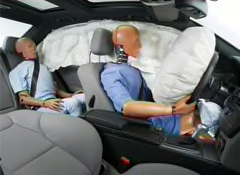
Head-protecting side air bags. IIHS side-impact crash tests clearly show the benefit of this feature. To date, only a few vehicles that were tested without head-protecting side air bags scored higher than Poor in the test. There are two types of side bags. A standard side air bag deploys from the seat or door trim. It typically protects a person's torso, but many don't do an adequate job of protecting the head. We recommend that you look for a dedicated head-protection bag that deploys from above the side windows. The most common type is a curtain air bag that covers the side windows in both front and rear, preventing occupants from hitting their heads and shielding them from debris. Curtain air bags can also help keep a person from being ejected should the vehicle roll over.
Safety-belt features. While the safety belt is arguably the single most important piece of safety equipment, some features are helping it do a more effective job. Adjustable upper anchors help position the belt across the chest instead of the neck to prevent neck injuries. They also make the belt more comfortable by keeping it from pulling down on a tall person's shoulder.
Safety-belt pretensioners instantly retract the belts to take up slack during a frontal impact. This helps position occupants properly to take full advantage of a deploying air bag. Force limiters, a companion feature to pretensioners, manage the force that the shoulder belt builds up on the occupant's chest. After the pretensioners tighten it, force limiters let the belt pay back out a little.
"Smart" frontal air bags. Front air bags have been standard on all new vehicles since 1998, and most models offer an advanced, multistage system that is tailored to the front occupants. Depending on the model, these "smart" systems can detect the presence and weight of the person in the front passenger seat, the driver's seat position, and whether the safety belts are fastened. It can then adjust the deployment of the air bags to minimize the chance of injury to smaller occupants or children.
Learn more about choosing a used car, avoiding a lemon, buying and selling a used car, pricing and financing, and more in our used car buying guide.

 WASHING MACHINE REVIEWS
 GENERATOR REVIEWS
 Build & Buy Car Buying Service
Save thousands off MSRP with upfront dealer pricing information and a transparent car buying experience.
 Get Ratings on the go and compare
while you shop