Sign In

More than 45 million Americans smoke cigarettes, the leading preventable cause of death in the U.S. Unfortunately, some stop-smoking methods, including nicotine gum and patches, are less effective than previously thought, according to a recent study in the journal Tobacco Control.
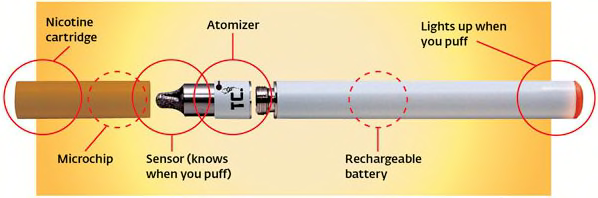
Enter battery-powered electronic cigarettes, which deliver vaporized nicotine without tobacco, tar, or other chemicals in regular cigarettes. (But nicotine itself has health risks of its own and is extremely addictive.) Their battery heats a cartridge of liquid nicotine solution, creating an aerosolized mist that the user puffs, or "vapes."
Though e-cigarettes emit no smoke, they deliver an experience like smoking, including the way they're held and the LED tip. Last year, 2.5 million Americans tried one. The cost: up to $100 for a starter kit, which often includes the e-cig unit, two rechargeable lithium batteries, and five flavor cartridges. (Each cartridge equals roughly one pack of cigarettes.)
Proponents of e-cigarettes say they're more healthful than the conventional type and that they might help smokers quit tobacco. Some research backs that up. In a study published last year in the International Journal of Clinical Practice, researchers interviewed more than 100 e-cigarette users and found that most were former smokers who had used the devices to help them quit. They'd tried to stop smoking previously an average of nine times, and two-thirds had tried a cessation drug approved by the Food and Drug Administration. A recent review of the available (albeit meager) scientific evidence on e-cigarettes in the Journal of Public Health Policy concluded that "electronic cigarettes show tremendous promise in the fight against tobacco-related morbidity and mortality."
Critics say that too little is known about the safety of e-cigarettes, which are unregulated. Some experts also worry that their availability online—where a user need only click a box saying he or she is 18—could entice children and teens to try them. So could some of the flavors, such as piña colada and vanilla.
In 2010, the FDA tried to block the sale of some e-cigarette brands, arguing that they're marketed as smoking-cessation devices, which the agency regulates. A court disagreed. Now, some states (including Mississippi, New Jersey, and Utah) and cities have proposed or enacted bans on the sale or use of e-cigarettes.
Bottom line. Talk to your doctor before trying to quit smoking with e-cigarettes. Because they're not regulated, safety is a question and you use them at your own risk.
News reports that an electronic cigarette exploded in a Florida man's mouth in February spurred us to file a Freedom of Information Act request to with the FDA to see what, if any, adverse-event reports it has received on e-cigarettes since they came on the U.S. market in 2006. The agency responded in early March with 39 reports logged through its adverse-event monitoring system. Of them, 31 dealt with negative health effects; eight were complaints about customer service or positive comments about e-cigarettes.
Among the most common complaints were headache, dizziness, nausea, sleepiness, and coughing or other respiratory symptoms. There was only one report of an e-cigarette exploding and causing burns.
Adverse-event reports don't establish causality, nor can they show whether a person was using a product as directed. On the other hand, the FDA estimates that it receives only 1 to 10 percent of all adverse events experienced by the public on products it regulates. Other people using e-cigarettes might have had symptoms but not reported them.
Either way, the reports underscore the need for the FDA to find a way to regulate e-cigarettes, which occupy a sort of regulatory no-man's land between smoking-cessation devices and tobacco products. The agency told us that it plans to develop regulations for e-cigarettes, but no proposed rules have yet been issued.

 WASHING MACHINE REVIEWS
 GENERATOR REVIEWS
 Build & Buy Car Buying Service
Save thousands off MSRP with upfront dealer pricing information and a transparent car buying experience.
 Get Ratings on the go and compare
while you shop