We Tested 49 More Baby Formulas for Lead and Arsenic
Almost half were good choices, including some powdered, ready-to-feed, and organic formulas made by Bobbie, Earth’s Best, Enfamil, and Similac


Infant formula is, rightly, one of the most strictly regulated foods on the market. Formula is an essential source of nutrition for millions of infants, and it’s absolutely crucial that the formula we give our babies be nutritious and safe. But even this vital, tightly regulated first food doesn’t always escape the effects of environmental pollution or process contamination, CR’s ongoing testing of infant formula shows.
In March 2025, Consumer Reports reported finding lead and arsenic in several powdered infant formulas, and bisphenol A and acrylamide in one formula as well. For a variety of reasons, these contaminants are unfortunately common in our food supply and environment (and have been found in studies of breast milk as well). In response, regulators pledged to ramp up oversight, increase testing of ingredients and finished products, and keep formula safe.
Now, a year later, CR has tested 49 more infant formulas for those same contaminants—following requests from readers to test liquid formulas and more alternative-protein formulas (such as soy-milk- and goat-milk-based formulas), as well as additional hypoallergenic formulas.
See the Results From CR's Previous Round of Infant Formula Testing
While some formulas had concerning levels of contaminants, we also found many safer choices. After seeing our results, the FDA pledged further action.
Fortunately, the results of our tests show that there are still many safe, inexpensive options for parents on the market today, and many are available through the Special Supplemental Nutrition Program for Women, Infants, and Children, or WIC.
Among the liquid and ready-to-feed formulas we tested, one-third landed in our list of top choices, with contaminant levels that were either very low or not detected at all. And over half of the powdered formulas we tested were top choices for low or undetected contaminant levels.
But our tests also indicate that there is still room for improvement, despite industry and government promises—including the Food and Drug Administration’s announcement of its Operation Stork Speed campaign the day after CR shared its initial findings in March 2025. Our most recent round of tests detected contaminants at potentially concerning levels in 26 of the 49 formulas we tested.
What We Tested For
Arsenic
What it is: Arsenic is a heavy metal that, over time, increases the risk for certain cancers. The most toxic form of arsenic is known as inorganic arsenic; it has previously been found in fruit juice, baby food, and bottled water. The Environmental Protection Agency limits how much arsenic is allowed in municipal drinking water (10 parts per billion), but the FDA does not currently have limits on how much arsenic is allowed in baby formula.
Where it comes from: Arsenic originates in the Earth’s crust but can also result from industrial processes such as fracking and the manufacture of pesticides. It can make its way into our food supply via the groundwater and the soil where crops are grown.
What we found: As we did in the last round of tests, CR tested for arsenic in two steps. An initial step looked for the total arsenic, and then a second test measured the (more concerning) inorganic arsenic if the formula exceeded our threshold for total arsenic levels. We tested for inorganic arsenic if total arsenic was 3.62 ppb or greater for powdered formulas, 0.81 ppb or greater for concentrated formulas, or 0.50 ppb or greater for ready-to-feed formulas. These levels were used because consuming a daily serving of formula at these levels could surpass the EPA’s RfD of 0.06 mcg/kg bw/day for a 3-month-old of average body weight.
We also calculated a “hazard quotient,” or the level below which no adverse health effects would be expected, based on average infant formula consumption from birth to 3 months of age. Read more details about our test methodology (PDF).
Our hazard quotient incorporates the Environmental Protection Agency’s assessment of the health risks posed by inorganic arsenic, which it uses in its regulations on arsenic in water and soil. In 2025, the EPA lowered the limit that it considers safe, and so we have taken that into consideration in our calculations. In this round of testing, we found 26 out of 49 formulas with inorganic arsenic at or above this new level of concern. (More on that below.)
While we separated the formulas in our tests into top choices and worse choices based on the levels of contaminants we found, all the formulas we tested are safe to feed your baby. You’ll see that even some of the formulas in our top choices tier have an orange marker for inorganic arsenic, indicating that the levels we found in our testing approach, but do not exceed, our experts’ levels of concern.
“The levels we found are not high enough to present an immediate health hazard or concern,” says James E. Rogers, PhD, Consumer Reports’ director of product and food safety research and testing. “We use the most protective standards in our testing for three reasons: First, we are concerned about infants’ long-term exposure to these contaminants. Second, there’s a possibility that your baby might encounter lead and arsenic from other sources. And finally, the fact that some levels in our tests are lower than others—and many are nondetectable—shows that it is possible to make safer formula, and we want to encourage lawmakers and industry to do everything possible to make that happen.”
Lead
What it is: Lead is another heavy metal that presents more immediate health concerns for the developing brains and bodies of babies (whereas arsenic exposure is a more long-term risk). Childhood lead exposure has been linked to attention deficit hyperactivity disorder, behavior problems, and lowered IQ.
Where it comes from: Pediatricians say there is no “safe” level of lead for a baby to be exposed to. But, like arsenic, lead is a heavy metal that occurs naturally and is pervasive in the natural environment. The FDA’s oversight plan to reduce lead exposure in early childhood is called Closer to Zero because it is so difficult to ensure that food or water is entirely lead-free. Its guidance to manufacturers of baby and toddler food is to keep lead at or below 10 or 20 parts per billion, depending on the ingredients, but that guidance doesn’t apply to formula.
What we found: In our 2025 tests, none of the formulas we tested were above our level of concern for lead—we use California’s maximum daily limit as our reference—but several formulas landed between half of that level and just below the level. This time around, three powdered formulas did exceed our level of concern, and several more landed between half of that level and just below.
CR is using a conservative limit because formula is not the only potential source of lead exposure in a baby’s life: Other sources could include household dust, soil, and the tap water used to mix powdered formula.
PFAS
What it is: Per- and polyfluoroalkyl substances, sometimes called forever chemicals, describe an ever-growing set of thousands of chemical compounds that accumulate in our bodies as we are exposed to them. A growing body of research suggests this exposure can harm our immunity, fertility, and longevity.
Where it comes from: Unlike arsenic or lead, PFAS do not occur in nature. These are entirely human-made pollutants, used for their stick- and stain-resistant properties. But because of their decades of production for use in frying pans, firefighting foam, and more, PFAS chemicals now pervade the natural world.
What we found: We tested all our formulas for PFAS and, not surprisingly, found PFAS in several of them. At least one PFAS compound was measured in over a quarter of the products we tested, in levels ranging from 0.1 to 5.6 parts per billion total PFAS. We aren’t including the results in our chart because we only tested one sample per formula, which isn’t a robust enough test to say which products have it and which ones don’t. But, notably, the compounds we detected in these formulas (like PFPeA and PFHpA) tended to be more obscure and less widely understood than the so-called legacy compounds, like PFOA and PFOS, whose health risks are well known. CR experts say that this underscores the need for more research in this area.
Other Concerning Chemicals
What they are: We also tested for acrylamide, cadmium, mercury, and several bisphenols, including BPA, because all of these are known to be harmful to babies’ health at too-high levels.
Where they come from: Acrylamide is a process contaminant, the byproduct of a chemical reaction that occurs during the manufacturing process, especially in starchy foods that are made with very high heat. BPA is another human-made chemical associated with plastics that can enter the food supply through environmental contamination, manufacturing processes, or food packaging. Cadmium and mercury are two more heavy metals, like lead and arsenic, that both exist naturally in the environment and are made more prevalent by industry.
What we found: The tests for these additional chemicals had reassuring results. Acrylamide was detected in two powdered formulas, but the levels were much lower than in other common foods, like toasted bread or french fries. BPA was detected in only three powdered formulas, and other bisphenols that we looked for (BPS and BPF) were not detected at all. Cadmium and mercury were found in several formulas, but in such low levels that CR’s experts did not flag them as concerning.

Photos: Consumer Reports Photos: Consumer Reports
Results: Ready-to-Feed and Concentrated Formulas
After we published the results of our first round of testing last year, one question we heard from a lot of readers was, “What about ready-to-feed and concentrated formulas?”
We had initially set out to look at a cross-section of the market of powdered formulas, which is the less expensive (and generally more popular) formula format. Ready-to-feed formula, by contrast, is often offered to premature babies in hospital NICUs or in new-baby hospital nurseries; the FDA also recommends that parents use it for babies under 2 months old and babies who are immunocompromised. The benefit of the ready-to-feed format for these babies is that it is made to be sterile and doesn’t need to be mixed with water. Concentrated formula comes in liquid form and needs to be diluted with water before feeding. According to experts, concentrated and ready-to-feed formulas are also usually more expensive, less available, and quicker to expire once opened compared with powdered formulas.
While ready-to-feed formula is a subset of the overall formula market, the stakes for its safety are higher because it’s meant for the most high-risk babies, at their most vulnerable times.
The chart below breaks down the results of our contaminant testing of liquid formulas, including 20 ready-to-feed liquid formulas and three concentrated liquid formulas. See the full numerical results of our tests (PDF), with the levels we found of these contaminants and others.
“All of the formulas in these tests are safe to feed your baby,” says Sana Mujahid, PhD, a mom and CR’s manager of food safety research and testing. “We used the most protective levels available to assess the potential health risks of these contaminants, because we want parents to be empowered by information to make the best choices possible for this first food of a baby’s life.”
Ready-to-Feed and Concentrated Formulas
Top Choices
Contaminants not detected or detected below level of concern
Listed Alphabetically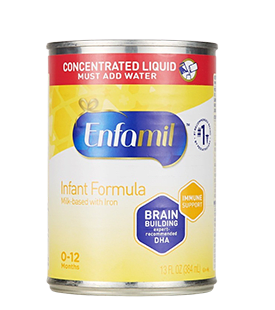
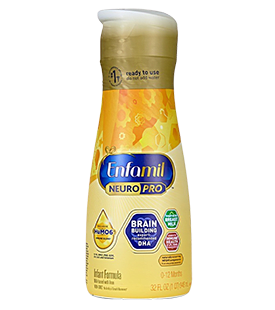
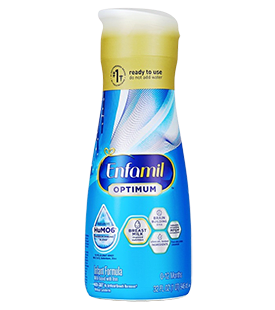
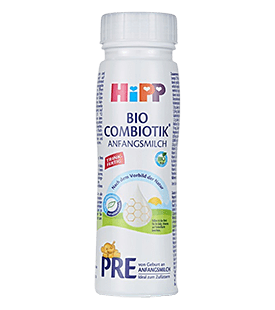
HiPP
Organic Whole Milk*
HiPP International
Ready-to-Feed
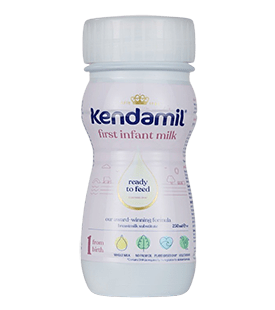
Kendamil
First Infant Milk*
Kendal Nutricare
Ready-to-Feed
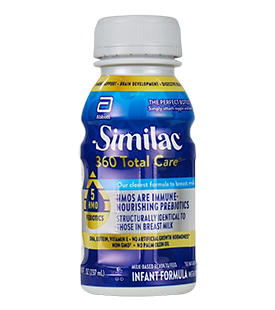
Similac
360 Total Care
Abbott Nutrition
Ready-to-Feed
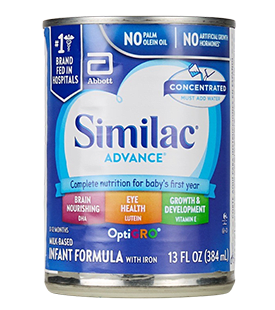
Similac
Advance
Abbott Nutrition
Concentrated
*Formulas with an asterisk are not registered with the FDA.
Worse Choices
Contains some contaminants at or above level of concern
Listed Alphabetically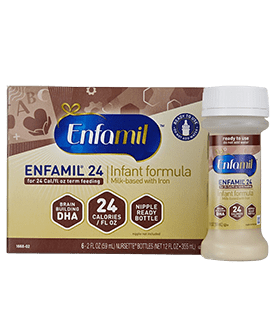
Enfamil
24
Mead Johnson
Ready-to-Feed
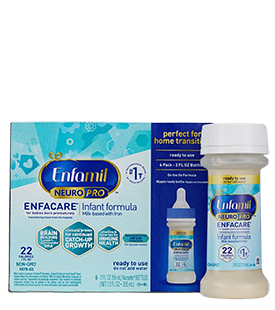
Enfamil
NeuroPro EnfaCare
Mead Johnson
Ready-to-Feed
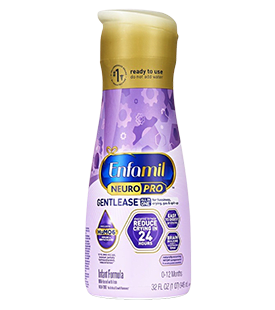
Enfamil
NeuroPro Gentlease
Mead Johnson
Ready-to-Feed
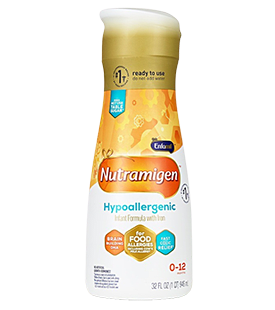
Enfamil
Nutramigen Hypoallergenic
Mead Johnson
Ready-to-Feed
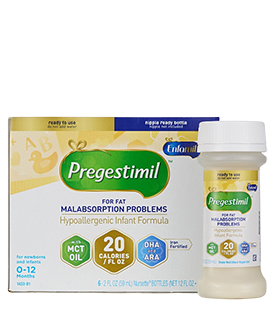
Enfamil
Pregestimil Hypoallergenic
Mead Johnson
Ready-to-Feed
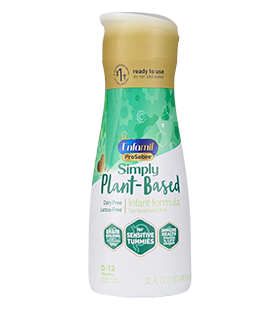
Enfamil
ProSobee Simply Plant-Based
Mead Johnson
Ready-to-Feed
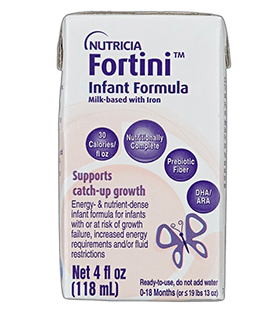
Nutricia
Fortini
Danone
Ready-to-Feed
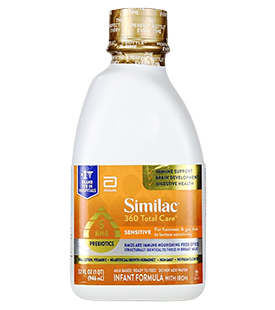
Similac
360 Total Care Sensitive
Abbott Nutrition
Ready-to-Feed
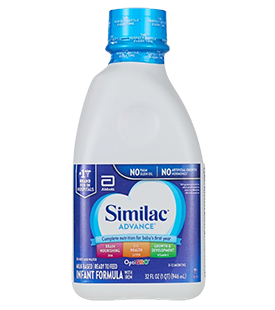
Similac
Advance
Abbott Nutrition
Ready-to-Feed
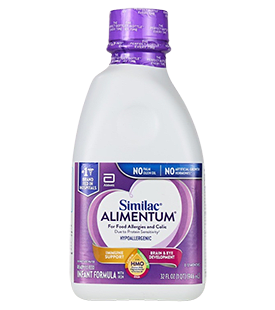
Similac
Alimentum
Abbott Nutrition
Ready-to-Feed
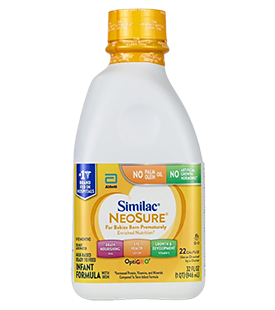
Similac
NeoSure
Abbott Nutrition
Ready-to-Feed
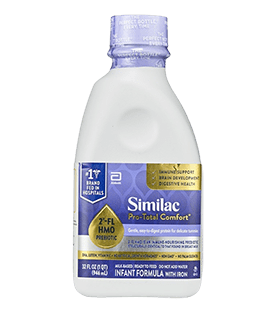
Similac
Pro-Total Comfort
Abbott Nutrition
Ready-to-Feed
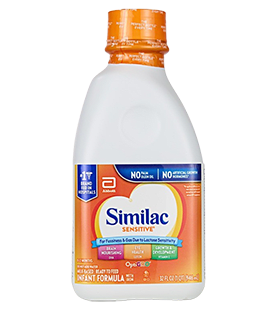
Similac
Sensitive
Abbott Nutrition
Ready-to-Feed
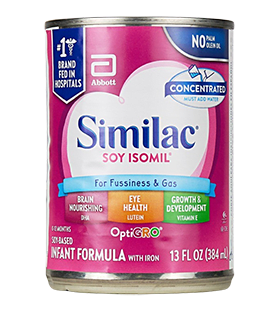
Similac
Soy Isomil
Abbott Nutrition
Concentrated
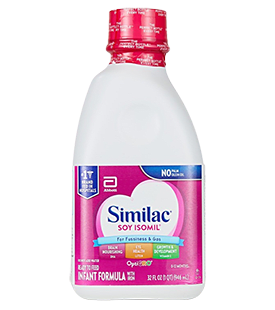
Similac
Soy Isomil
Abbott Nutrition
Ready-to-Feed
A Note About Arsenic
In the time since we tested and analyzed our last set of formulas, the Environmental Protection Agency has released the results of its toxicology review on inorganic arsenic, which analyzed new research on how exposure to it may harm human health. The EPA’s report says “robust” evidence demonstrates that inorganic arsenic can cause heart disease and type 2 diabetes, and “moderate” evidence demonstrates effects on infant growth, as well as cognitive and neurological effects on children and adolescents.
As a result of its review, the agency lowered its “reference dose” for inorganic arsenic—meaning, the amount the agency considers to be risky—by analyzing the most current research on how exposure may increase the risk of cancer and other harms. In other words, the agency now considers exposure to even lower levels of inorganic arsenic to be a higher risk.
The EPA’s newly adjusted reference dose also in turn affects the way we assess the inorganic arsenic we detect in formula—meaning, what levels should count as “levels of concern.” So while it may look like there is more arsenic in the formulas we tested in this round than last time, what has actually happened is that the way we’re measuring risk has changed, to stay aligned with the most current science.
While the FDA doesn’t set limits on arsenic in infant formula, the European Union does—and all the formulas in our tests fall below the EU’s limits of 20 parts per billion inorganic arsenic for powdered formula and 10 ppb for liquid formula.
To determine the potential risk posed by the infant formulas in CR’s tests, we used internationally recognized health-based daily exposure limits for lead, inorganic arsenic, cadmium, mercury, BPA, and acrylamide. Our results indicate which products had comparatively higher levels, and are not assessments of whether a product exceeds a legal standard. We used those levels because there are no federal limits for contaminants in infant formula, and CR’s scientists believe these levels are the most protective available.
Our results are a snapshot in time and may not be representative of the contaminant levels in every formula. However, they underscore the feasibility of manufacturers getting to lower levels and reducing babies’ overall risk.
Read the full methodology (PDF) and see the full test results (PDF).
Results: Additional Powdered Formulas, Including More Hypoallergenic Options
Many readers wrote to CR with specific requests to test additional powdered formulas that hadn’t been included in our first round of testing. We tried our best to fit them all into this second round. In addition to traditional cow-milk-based powders, readers had questions about lactose-free, hypoallergenic, sensitive, and alternative-protein formulas that parents often try when their babies seem intolerant of milk proteins or have other digestive issues.
Readers had noticed that the few hypoallergenic formulas we had tested in the first round tended to be higher in contaminants and landed in the worse choices tier in our chart last time. Experts say the reason for this pattern could be that hypoallergenic formulas tend to contain more plant-based ingredients than regular dairy-based formulas, and plants may be more susceptible to heavy metal contamination from soil and water than other types of ingredients.
In this second round of testing, we found that many formulas marketed as hypoallergenic or sensitive did have concerning levels of inorganic arsenic. However, several in this category were better options. For babies who need hypoallergenic formula (also called extensively hydrolyzed), Nestlé Extensive HA and Nutricia Neocate Syneo HA are both good choices.
HiPP Hypoallergenic also performed well in this category, but parents should be aware that it’s one of several formulas we tested that have not been registered with the FDA. Unlike several European formula companies that the FDA granted special status to during the 2022 shortage, other formulas made overseas have not yet fallen under the FDA’s oversight. The formulas outside of the FDA’s regulation are denoted with asterisks in the test result charts above and below. We decided to include them in CR’s tests because parents are still able to buy them from third-party vendors and non-U.S. retail sites. But pediatricians say that using imported formulas does bring certain risks that parents should be aware of. The scoop-to-water ratio may vary, so parents will need to pay close attention to the mixing instructions for powder formulas. The formulas won’t necessarily have the same levels of vitamins and nutrients that the FDA recommends. Finally, parents may be less likely to hear about recalls from manufacturers overseas.
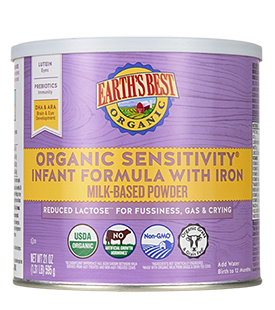
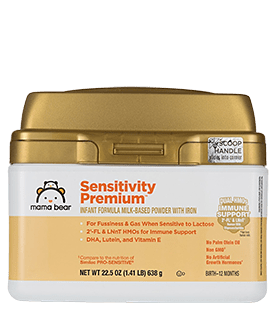
For babies who don’t necessarily need extensively hydrolyzed formula, but whose needs call for a “sensitive,” “gentle,” or partially hydrolyzed formula, Earth’s Best Organic Sensitivity, Enfamil Reguline, and Mama Bear (Amazon) Sensitivity Premium all performed well in our tests. You can also read more about these different categories in CR’s baby formula buying guide.
Powdered Formulas
Top Choices
Contaminants not detected or detected below level of concern
Listed Alphabetically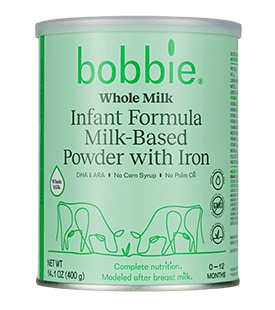
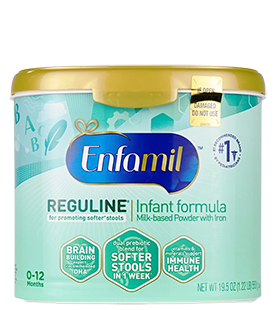
Enfamil
Reguline Infant Formula
Mead Johnson
Powder
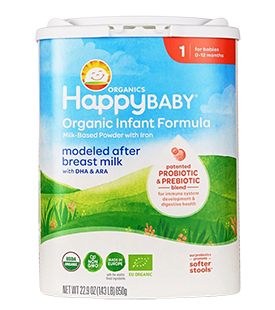
Happy Baby Organics
Organic Infant Formula
Danone
Powder
Shop: Happy Baby Organics, Amazon, Target, Walmart
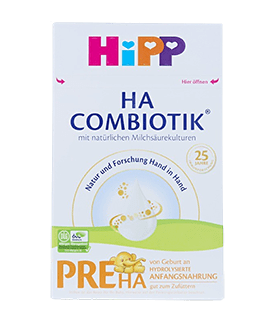
HiPP
HA Combiotik Hypoallergenic Infant Formula*
HiPP International
Powder
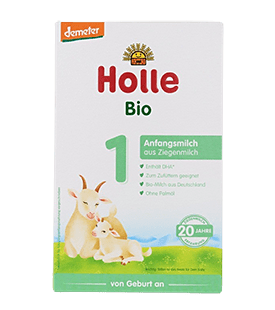
Holle
Organic Goat Milk Infant Formula*
Cornu Holding
Powder
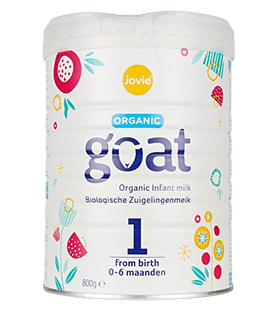
Jovie
Organic Goat Milk Infant Formula*
Unica Global B.V.
Powder
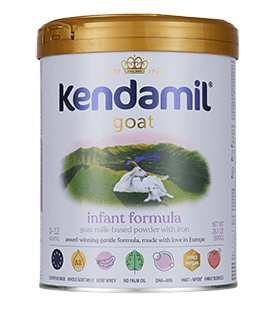
Kendamil
Goat Infant Formula
Kendal Nutricare
Powder
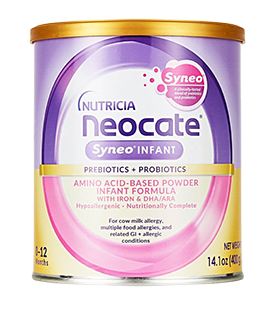
Neocate
Syneo Hypoallergenic Infant Formula
Danone
Powder
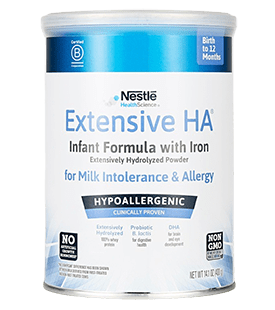
Nestlé
Extensive HA Infant Formula With Iron
Nestle
Powder
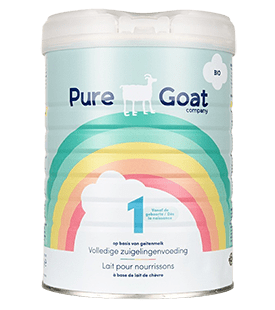
Pure Goat
Bio Complete Infant Formula*
Pure Goat Company
Powder
*Formulas with an asterisk are not registered with the FDA.
Worse Choices
Contains some contaminants at or above level of concern
Listed Alphabetically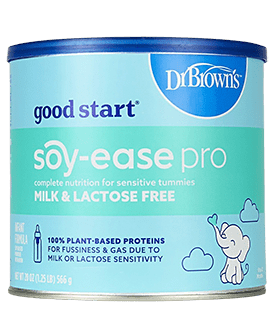
Dr. Brown's
Good Start Soy-Ease Pro
Perrigo
Powder
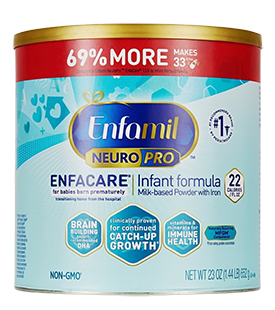
Enfamil
NeuroPro EnfaCare
Mead Johnson
Powder
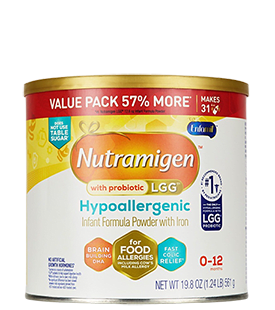
Enfamil
Nutramigen With Probiotic LGG
Mead Johnson
Powder
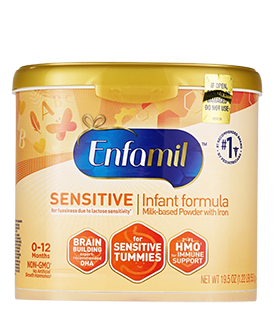
Enfamil
Sensitive
Mead Johnson
Powder
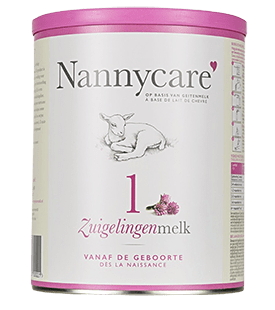
Nannycare
Goat First Infant Milk
DGC New Zealand
Powder
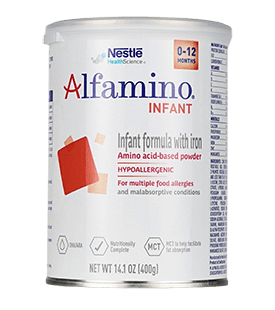
Nestlé
Alfamino
Nestle
Powder
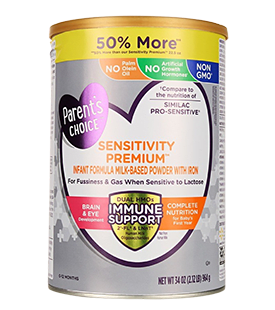
Parent's Choice (Walmart)
Sensitivity Premium
Perrigo
Powder
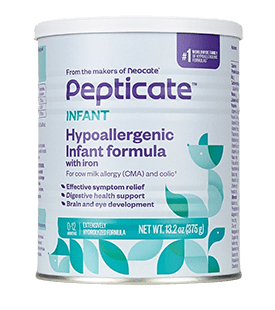
Pepticate
Hypoallergenic Infant Formula
Danone
Powder
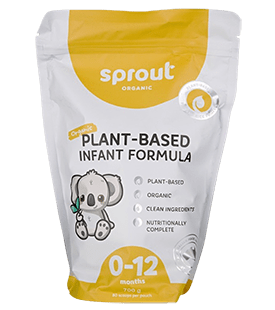
Sprout Organic
Plant-Based Infant Formula*
Sprout Organic
Powder
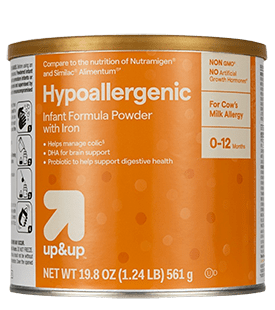
Up&Up (Target)
Hypoallergenic
Perrigo
Powder
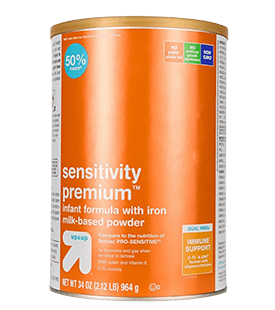
Up&Up (Target)
Sensitivity Premium
Perrigo
Powder
*Formulas with an asterisk are not registered with the FDA.
Formula Companies Respond
We tested 49 different formulas, but the U.S. market is almost entirely dominated by just a handful of formula manufacturers. About half of all formula bought in the U.S. is bought through the Special Supplemental Nutrition Program for Women, Infants, and Children (WIC), and almost all of that is made by just two companies: Abbott and Mead Johnson. Abbott makes Similac and EleCare, while Mead Johnson makes Enfamil and PurAmino.
A third company, Perrigo, is responsible for making many familiar store brands—including Kirkland Signature (Costco), Member’s Mark (Sam’s Club), Parent’s Choice (Walmart), and Up&Up (Target)—as well as Dr. Brown’s, which we tested last time, and Earth’s Best, which we included in this current round of testing.
Together, the formula made by these three companies—Abbott, Mead Johnson, and Perrigo—makes up 79 percent of the U.S. market, according to 2022 estimates.
CR sent questions to all the companies about the types of contaminants they test their ingredients and products for, their thresholds for allowed contaminants, and what they thought might be the sources of any contaminants we found in our tests. We also contacted companies producing formulas that didn’t contain contaminants to learn what they were doing to achieve these positive results.
Similac and EleCare manufacturer Abbott Nutrition and Enfamil manufacturer Mead Johnson both sent detailed responses to CR’s test results and questions. These companies, which dominate the infant formula market, have products that appear in every category in our charts; CR’s tests detected contaminants at levels of concern in some of their formulas and didn’t detect them in others.
Both of these companies challenged CR’s results. They argued that trace levels of heavy metals occur naturally in the environment and throughout the food supply, and that this is not an issue that is unique to infant formula.
“Abbott’s infant formulas are safe and parents can use them confidently,” wrote a spokesperson for Abbott. “Today, Abbott’s infant formulas—including those sold in the U.S.—meet existing regulations for heavy metals set by the European Commission and Health Canada. These European Commission limits are the most stringent regulatory limits for heavy metals in infant formula adopted to date by any nation in the world. They also meet FDA’s current limits for heavy metals in (non-formula) baby foods, children’s juices, and drinking water. The test results shared with Abbott by Consumer Reports confirm as much.” Abbott also took issue with CR’s use of California’s extra-protective limits to assess risk.
“We employ stringent testing protocols and are proud of our efforts to date to reduce the levels of unintended materials in our products, which meet all safety and quality standards set by U.S. and global regulatory bodies,” wrote a Mead Johnson spokesperson, adding that “we test ingredients prior to manufacturing our products” and “we employ a stringent testing protocol for all finished products. Only products that meet our rigorous safety standards are released to market.” Mead Johnson also emphasized that heavy metals are never intentionally added to its products.
Perrigo, which makes Dr. Brown’s and Earth’s Best formula, as well as many popular store brands in our tests, including Mama Bear (Amazon), Parent’s Choice (Walmart), and Up&Up (Target), told us that it performs risk assessments for all its raw ingredients and tests for any contaminants of concern, and that it surveys all its finished products for 25 to 30 contaminants.
Danone is the parent company of Happy Baby Organics and Nutricia (which makes Neocate, Pepticate, and Fortini). Happy Baby Organics, which performed well in these tests, told CR, “Every batch of product undergoes more than 1,850 rigorous quality and safety tests, including testing for heavy metals.” Nutricia, whose formulas had more mixed results in our tests, said, “Nutricia infant formula batches undergo more than 1,000 quality tests, including testing heavy metals, to help ensure high quality and product safety before reaching families.” Both Happy Baby Organics and Nutricia also added that they screen their formulas for Clostridium botulinum, the bacteria responsible for infant botulism.
Kendal Nutricare, which makes a ready-to-feed Kendamil milk-based formula and a powdered goat milk formula in our tests, said that it takes “extensive measures to control and reduce” environmental contaminants in its products. “In the case of our goat recipe, inorganic arsenic levels were well below even the most conservative safety limits and within the range naturally expected for milk-based formulas,” wrote a Kendal Nutricare spokesperson.
Nannycare, which produces goat milk formula in New Zealand for the U.K. market, told us, “The trace levels of certain contaminants reported in your testing are consistent with what is commonly observed at very low background levels in agricultural and dairy-based foods and are widely recognised by regulators as unavoidable at trace levels.”
Australian manufacturer Sprout Organic told CR, “Based on the data provided, the results show low-level presence of certain elements that are known to occur naturally in plant-based ingredients” and that “the detected levels fall within internationally recognised health-based benchmarks.”
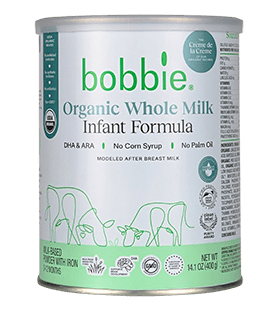
All the Bobbie formulas we have spot-checked in both rounds of testing have been in the top-choice category, with no or low levels of detected contaminants. In a statement to us, a Bobbie executive wrote, “We have strict standards for contaminants across the board—every ingredient we bring into our process has strict requirements for heavy metals, microbials, and other contaminants.”
A representative from Jovie, which makes a European goat milk formula that performed well in our tests, said, “Our infant formula complies with strict EU requirements and is subject to rigorous testing at every stage, from incoming ingredients and (packaging) materials to the finished product.”
Nestlé’s representative told us, “All findings referenced by Consumer Reports fall within established regulatory limits, and our formulas continue to meet our strict safety and quality standards for infant nutrition,” and also wanted to make it clear that the recent global Néstle recall did not affect any of its formula produced for the U.S.
Our tests detected acrylamide, BPA, or both in three powdered formulas. Mead Johnson, which makes Enfamil Nutramigen, challenged CR’s test results for these contaminants and said that neither contaminant had ever been detected in any of the company’s products in its own tests. Sprout Organic said, “Acrylamide can form in small amounts during heat-processing steps common to many dry food products,” and that the BPA levels we identified in our tests “are extremely low and . . . well below levels considered to pose a health risk.” Nannycare did not comment specifically on CR’s BPA test results of its formula.
HiPP, Holle, and The Pure Goat Company did not respond to CR’s requests for comment.
Why Don’t Formula Companies Have to Test for These Contaminants?
Food safety experts and pediatricians say that one of the most important improvements formula manufacturers can make is to test both their raw ingredients and their finished products—and to do it more frequently and more transparently. Manufacturers are still not legally required to test for the contaminants we looked at in our testing, nor share their test results with either the FDA or their customers.
And unlike infant formula sold in the EU, Canada, Australia, and New Zealand, there are currently no limits on the levels of contaminants allowed in infant formula in the U.S. That is something many health experts would like to see change.
“It’s just incredible that we would allow things that cause cancer and cognitive deficits in infant formulas,” says David Carpenter, MD, director of the Institute for Health and the Environment at the State University of New York at Albany.
A spokesperson for the FDA told CR in March 2025 that the agency has been (thus far unsuccessfully) trying to change that, by asking Congress for the authority to require the industry to test for toxic chemicals. Now, a year later, the agency still doesn’t have the power to require it. But the FDA can buy and spot-check formulas themselves—just like we did—and in that way, help clean up the industry from the outside.
“The infant formula companies do their own set of testing, but I think a bit more transparency from those companies through the FDA in terms of how often that testing happens and what are their company levels would be helpful for consumers, as well for medical providers, to be able to navigate that,” says Nan Du, MD, who’s a pediatric gastroenterologist at Boston Children’s Hospital and who was tapped by the FDA to be a member of an expert panel for its Operation Stork Speed initiative last year.
Chemical contaminants like arsenic and lead are certainly not the only problems plaguing the formula industry, nor are they the only things taking up regulators’ attention right now.
What’s Next for Operation Stork Speed?
The day after we shared the results of our first round of tests with the FDA, HHS announced Operation Stork Speed, a set of initiatives to increase oversight over the infant formula industry. According to the announcement, the FDA would be increasing its testing of formulas for heavy metals and other contaminants, as well as undertaking a new review of the nutrients and ingredients that are currently required in formulas sold in the U.S.
Operation Stork Speed Must Deliver for Babies
Tell the FDA: Set limits on lead and arsenic in infant formula. Sign the petition.
During an expert panel convened by the FDA as part of Operation Stork Speed, which was broadcast live in June 2025, the conversation focused much more on the pros and cons of various formula ingredients than on the problem of toxic contaminants. Heavy metals were mentioned a handful of times, as was the fact that other countries, unlike the U.S., set limits on heavy metals in formulas. But most of the airtime went to topics like seed oils and corn sweeteners. (For a breakdown of the nutritional composition of baby formula, including a guide to understanding what’s on the label, refer to our baby formula buying guide.)
The agency has sought and received comments from the public about the nutrients and ingredients in formulas, including from all the major formula makers. It recently announced a redesign of the infant formula section of its website that makes information easier to find. And the Stork Speed expert panel recently published a trio of journal articles about how oversight can be improved. The article focusing on safety and regulation argues that the industry should increase and standardize its testing: “Additionally, increased transparency from the United States FDA regarding the frequency of testing and the most recent contaminant levels is critical for rebuilding consumer trust in the safety of United States formulas,” the group of experts wrote.
But as of this writing, it is unclear how, or whether, Operation Stork Speed has made the infant formula market any safer. In response to questions for this article, the FDA again told CR that it has asked Congress for the authority to require formula manufacturers to test ingredients and finished products for contaminants but has not yet received it. An agency spokesperson also said that the agency is “actively testing a variety of infant formula products for the presence of heavy metals and other contaminants,” including pesticides and PFAS, but the details or results of those tests have not been made public.
Steven Abrams, MD, professor of pediatrics at the University of Texas at Austin Dell Medical School, who is part of the infant formula expert panel convened by the FDA, says that the campaign’s progress was slowed somewhat by the federal government shutdown last fall and that the FDA is also likely overwhelmed by the ByHeart investigation. But, he says, he and his colleagues are eager for Stork Speed to focus more now on how the agency can work to minimize contamination of all kinds.
“We’ve been pushing to get that process up and rolling again, and pointing out that the whole ByHeart story emphasizes even more the need to get that going, because the intent of the process, the original Stork Speed description, very much included issues of contamination,” Abrams says.
While federal oversight is still ramping up, however, state-level agencies are already making progress toward testing and transparency. In January 2026, Florida Gov. Ron DeSantis announced a new initiative by the state health department to test infant formulas for heavy metals and pesticides; a government website displays the full results of its first round of testing.
CR’s food safety experts and advocates say that our test results add further evidence to the argument that formula manufacturers should frequently and rigorously test their ingredients and finished products for toxic chemicals and deadly microorganisms. And they say that the FDA should kick Operation Stork Speed into higher gear to oversee and enforce these necessary improvements.
“So far, there has been a lot of sound and fury associated with this initiative in the form of declarative press statements, but it hasn’t translated into any meaningful action,” says Brian Ronholm, CR’s director of food policy. “At some point, Operation Stork Speed has to deliver something.”
What Parents Should Know
Seeing that there are any toxic chemicals in infant formula, however low the levels, can be alarming. CR’s experts and advocates continue to push for more oversight from regulators and more frequent (and more transparent) testing from manufacturers. But formula remains the best (and only) option for feeding young babies when parents can’t breastfeed or choose not to. CR’s tests also make clear that there are good, budget-friendly options for formula-fed babies.
Here are some more things to know about formula.
Keep these results in perspective. Consumer Reports is using the lowest, most protective levels to measure contaminants and assess potential risks because infant formula is a baby’s first and most important food. Low levels of contaminants do not necessarily mean that babies exposed to them will have adverse health outcomes.
Putting Heavy Metal Levels in Perspective
It’s scary to think about contaminants in infant formula. But to put CR’s results into perspective, the highest level of lead we found in our formula tests is much lower than what was found in lead-contaminated foods that made headlines in recent years, like protein powders and applesauce pouches.
CR’s experts use the lowest, most protective levels to assess potential contaminant risks. CR’s level of concern is based on California’s maximum allowable daily limit (MADL). The FDA has not set numerical limits for lead or arsenic in infant formula, but the EU limits them both to 20 parts per billion (ppb) in powdered formula and 10 ppb in liquid formula.
Lead
Arsenic
Talk to your pediatrician. If you’re concerned about any of the results discussed here and you think you might want to switch the formula you feed your baby, talk to your child’s care provider for tips. Some of the formulas we tested are meant for babies with specific medical needs, and may not be right for yours. Don’t switch to an imported formula that may not fall under FDA oversight, which comes with its own risks, without talking to a doctor first.
Never ever try to make your own baby formula or offer alternative foods. It’s unsafe from a nutrition standpoint, and if the goal is to avoid heavy metals or other contaminants, keep in mind that whatever ingredients you’d be using for your own recipe would probably also contain them.
Use clean water to mix into your powdered formula. The EPA sets limits on contaminants in tap water for most of the country, but not everywhere. If you drink water from a well, for instance, that water is not regulated by the EPA. So it’s a good idea to get well water tested for heavy metals and PFAS before using it. You can contact your local health authorities with questions, and if you have concerns about environmental pollutants particular to your area, consider using bottled water or investing in a filtration system.
Remember, this isn’t all on you. CR always wants to empower readers with more information about products on the market so they can make good choices. Parents can’t be expected to do their own independent lab-testing of every food they decide to give their kids. That’s why safety experts and advocates believe that transparency from both food manufacturers and regulators is key. “It shouldn’t be on consumers to protect their children from [contaminants] in infant formula,” says Hannah Gardener of the University of Miami. “There’s no way for parents to know the heavy metal contamination unless there’s disclosure and clear, easy-to-access, easy-to-interpret disclosure.”
Editor’s Note: This article, originally published March 3, 2026, has been updated to reflect which formulas in our tests fell below our total arsenic threshold and therefore were not tested for inorganic arsenic. It also includes additional information about our testing for arsenic and inorganic arsenic.


