Sign In

Menu
Suggested Searches
Recent Searches
Suggested Searches
Product Ratings
Resources
Chat With AskCR
Resources
All Products A-ZThe payment for your account couldn't be processed or you've canceled your account with us.
Re-activateMy account
Sign In
My account
Sign In
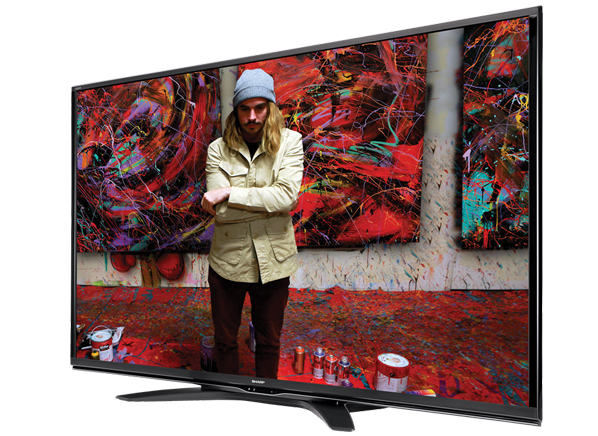
When LCD TVs with LED backlighting (often and incorrectly called LED TVs, although they use LCD display technology) first came out, they were luxury items—big screens with big price tags. But stores are now crowded with LED models from a growing number of brands, in all sizes and prices. In fact, we've seen some sets as small as 19 inches and as cheap as $199.
And buyers are snapping them up. In the first three months of this year, 12 percent of TVs purchased in the U.S were LED-backlit models, according to market research firm iSuppli. By 2013, more than 80 percent of LCD sets with screens 40 inches and larger will have LED backlighting, the firm projects.
We can testify to the recent explosion of LED-backlit models. Samsung now lists 44 such sets on its website, ranging from a 19-incher priced at $380 to a 55-inch 3D set listing at $7,000. Sharp, Sony, and Vizio each feature more than a dozen LED models on their sites. You'll find 40-inch LED-backlit sets from these big names going for about $1,000 or so, and 32-inch models for hundreds less. Westinghouse recently announced that its entire lineup of LCD TVs would use LED backlighting by the end of the year.
Lesser-known "budget" brands like Haier, Insignia, and Sceptre are also selling LED-backlit sets, including small-screen models. One reason we're seeing so many LED-backlit TVs with 19-, 22-, and 24-inch screens is the crossover from computer displays. Monitors with LED backlighting started showing up about two years ago. By adding a TV tuner and making a few other changes, manufacturers developed small TVs targeted at kitchens, bedrooms, and desktops
There are a few reasons to consider an LCD TV with LED backlighting. Depending on which type of LED backlighting a set has, it might display better black levels and contrast than typical LCD TVs, have a much slimmer profile, and consume less energy.
The priciest models tend to be those with full-array LED backlights and a feature called local dimming. The LEDs are spread across the entire back panel and divided into zones that are controlled independently. Segments of the backlight can be dimmed behind a dark scene to enhance black levels while remaining bright in other areas, improving contrast. Some models with this type of LED lighting have the best black levels we've so far seen from an LCD set. However, we've seen less effective implementations of local dimming that can create undesirable effects such as halos around objects or odd illumination of dark areas. You might be able to turn off local dimming, but then you'll lose any improvement in black levels.
Super-slim LCDs with profiles as thin as an inch or so use a design called "edge" LED backlighting. This places LED lights around the perimeter of the panel's frame and uses special diffusers to spread light uniformly across the panel. Most sets with edge LEDs don't offer local dimming, and thus don't have the same improvement in black levels. However, we recently saw the first models to combine edge lighting and local dimming.
Both types of LED backlighting can cut electric bills by a few dollars a month compared with an LCD that has the usual CCFL (cold-cathode fluorescent lamp) backlight. One 52-inch set in our Ratings, for instance, has an estimated annual energy cost of $33, less than half that of several other models of that size.
Our current TV Ratings (available to subscribers) list 17 fully tested LCD sets with LED backlighting, and several in-test models that we'll be reporting on soon. Have you bought an LED-backlit model. We'd love to hear why you bought it, and what you think of it.
—Eileen McCooey

 WASHING MACHINE REVIEWS
 GENERATOR REVIEWS
 Build & Buy Car Buying Service
Save thousands off MSRP with upfront dealer pricing information and a transparent car buying experience.
 Get Ratings on the go and compare
while you shop