

-
Foam Mattresses
Foam Mattresses Ratings -
Innerspring Mattresses
Innerspring Mattresses Ratings -
Adjustable Air Mattresses
Adjustable Air Mattresses Ratings


-
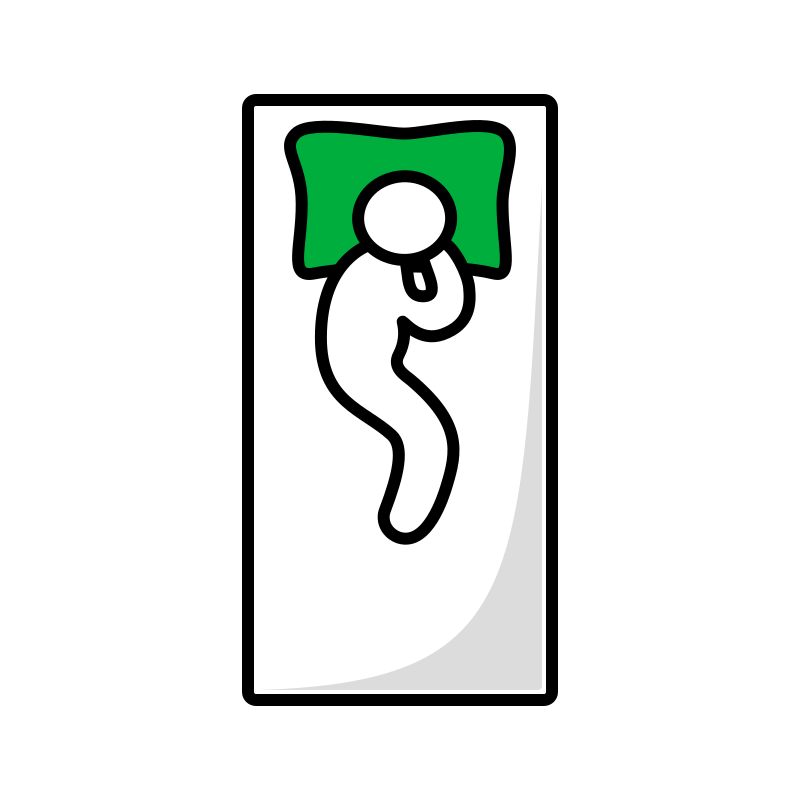
Twin 38x75 inches
Great for small children and small bedrooms, a twin-size bed comfortably fits one person.
-
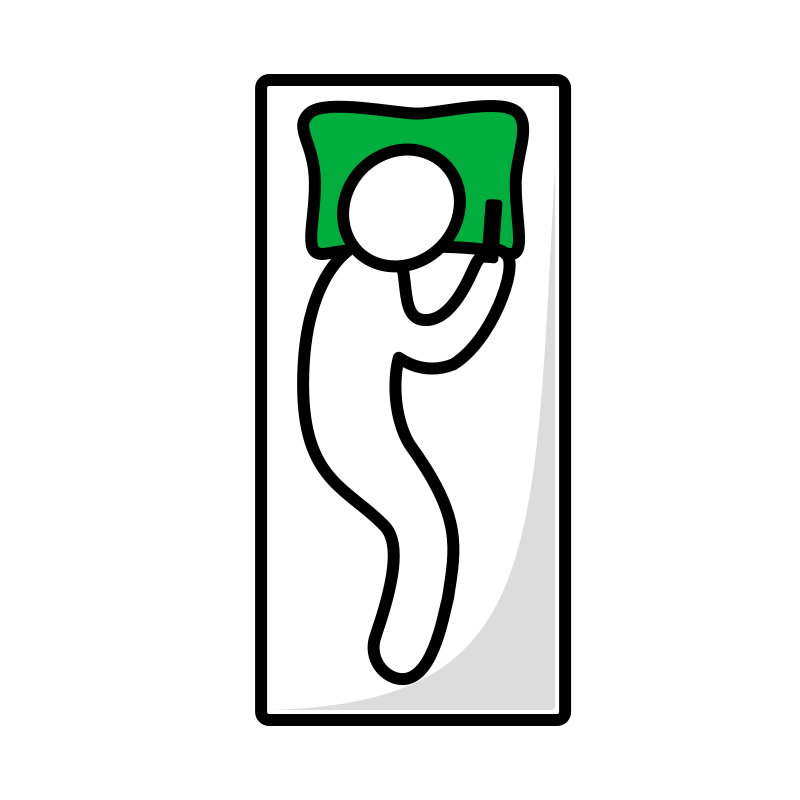
Twin XL 38x80 inches
Growing teens and college students appreciate the extra legroom on a twin XL, which comfortably fits one person. It's a suitable size for a studio apartment or a cozy bedroom.
-

Full/Double 54x75 inches
Also found in guest rooms, a full bed—commonly known as a double bed—offers more width than a twin but can still fit in smaller spaces. It comfortably sleeps one person, but it can accommodate two smaller people.
-

Queen 60x80 inches
The most commonly sold mattress size, and the size we test at CR, a queen offers enough space for two people to sleep comfortably and offers plenty of room for a solo sleeper who likes to move around. Given its size, a bedroom of at least 10x10 feet is recommended.
-
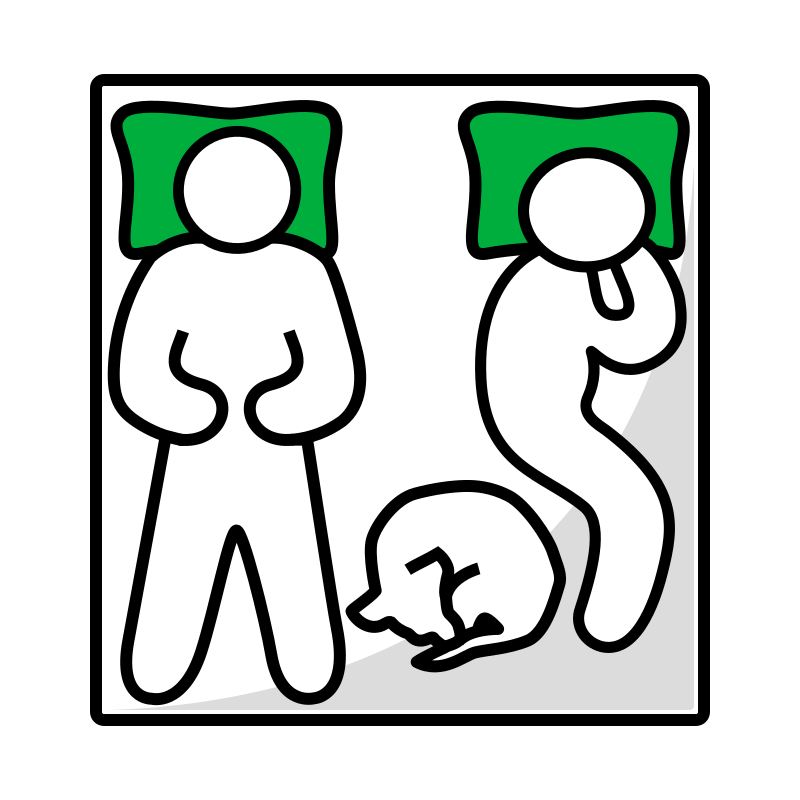
King 76x80 inches
Great for couples, a king mattress offers ample room for two people to sleep comfortably and move about throughout the night without feeling restricted. These mattresses are ideal for larger bedrooms of at least 12x12 feet.
-
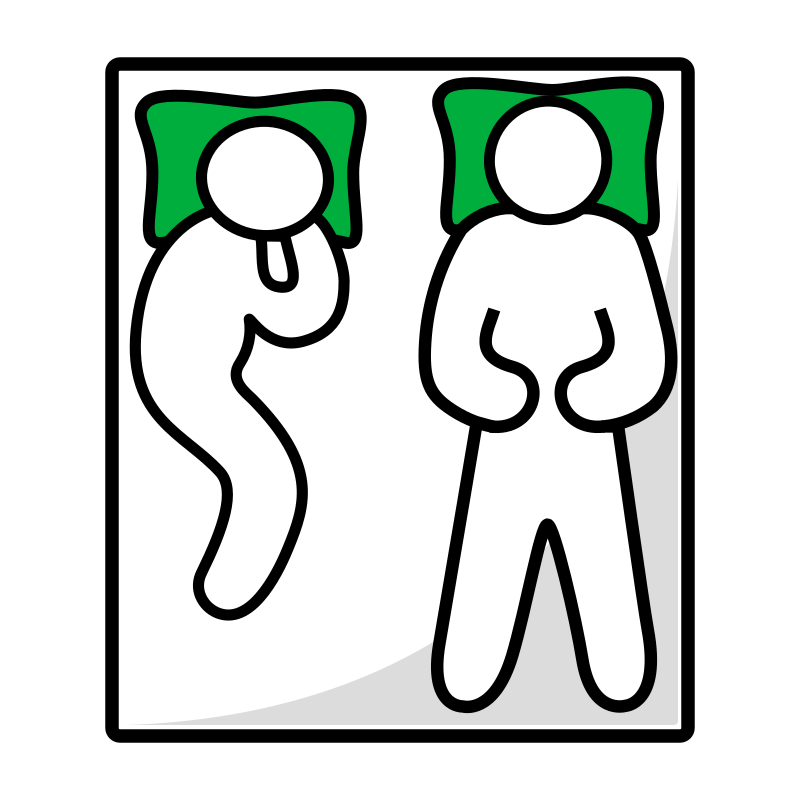
California King 72x84 inches
The California King is the longest of the commonly found mattresses on the market. That makes it a great fit for taller couples who want extra legroom and can compromise on the width. Like a standard king bed, these mattresses are best suited for larger bedrooms with a minimum size of 12x12 feet.
-
Firmness level
One brand's "medium" might be another brand's "firm." To help you compare, we measure each mattress against an industry standard using a scale from 1 (extremely soft) to 10 (extremely firm). Check our ratings for more, and see best firm mattresses and the best soft mattresses from our tests.
-
Durability
To test for durability, we run a 300-plus-pound wood roller across the surface of each mattress 30,000 times—simulating eight to 10 years of use. Our tests found that some of the most wallet-friendly mattresses can also be quite durable. See our ratings chart for more.
-
Breathability
Some mattresses allow more airflow than others. That means less trapped heat. Generally, innerspring models retain less heat than foam because of the coils, but how hot you sleep ultimately depends on a mattress's overall construction. See “Best Mattresses for Hot Sleepers” for more.
-
Stability
Stability refers to a mattress's ability to isolate motion—allowing a sleep partner (or pet or child) on one side of the mattress to shift without jostling a sleeper on the other side. Generally, foam models have better stability than innerspring. (Note: Innersprings with individually wrapped coils do better than those without.) To see details in our ratings, click "Best For" and filter for high-performing mattresses that also offer good stabilization. You can also read “Best Mattresses for Couples.”
-
Certifications
That "new mattress smell" is what you detect when volatile organic compounds (VOCs) escape into the air from the foam, upholstery, and adhesive in a mattress. In high concentrations released indoors, these chemicals can lead to negative health effects. So before using a mattress, let it off-gas with the windows open until the odor dissipates. If you’re sensitive to chemicals, have allergies, or have a respiratory condition, consider a mattress that is certified for low levels of potentially toxic chemicals. See the best low-VOC mattresses and certifications for more.
-
Support
A good mattress will keep your spine aligned throughout the night, so you don't wake up feeling achy. That alignment, or support, depends on not just the mattress itself but also how it interacts with the weight of your body, how that weight is distributed, and your sleep position. We assess each mattress for its ability to support side and back sleepers as well as large and small sleepers. Explore our ratings for more, and check our reviews of the best mattresses for side sleepers and for back sleepers.


-
Myth: Thicker mattresses are better
Truth: The best mattress thickness is a matter of personal preference. A thick mattress might appear luxurious, but it's really about what's adding the height. Poor-quality fillers can be prone to sagging and softening. In our ratings, the average foam mattress is about 11 inches, the average innerspring is about 13 inches, and the average adjustable air mattress is 12½ inches.
-
Myth: All hybrids are the same
Truth: They vary wildly. Part innerspring and part foam, these mattresses offer the resilience of coils with the cuddle of foam. When you shop, note the number and height of the coils and the thickness of the foam layers. Mattresses with a higher proportion of foam will feel more foam-forward, and those with less will feel more like an innerspring.
-
Myth: Firm mattresses relieve back pain
Truth: The right choice is not about the mattress itself, but how supported you feel on it. Your spine should feel aligned, not flexed or twisted—whether the mattress is firm, soft, or something in between. In fact, a Utica College study found that the best mattress for back pain is one that’s medium-firm—however the user describes it.
-
Myth: Gel foam mattresses are cooling
Truth: They don’t necessarily retain less heat than non-gel foams. That’s because while gel-infused foams might feel cool to the touch at first, they’ll eventually warm up with extended exposure to body heat. And while some foams are more breathable than others, none can actively cool you, unless equipped with a system of fans or chilled water (features more likely to be found in cooling mattress pads).
-
Myth: Good mattresses are expensive
Truth: Not necessarily. Plenty of our high-performing mattresses are in the $1,000 range, and there are even some for under $600. Mattresses that cost around $2,000 or more tend to have extras that are nice to have (such as an organic-cotton cover and latex foams) but aren’t necessarily crucial to back support or durability.
-
Myth: A mattress topper can fix an old mattress
Truth: A mattress topper is unable to firm up a mattress that feels too soft, much less add support to an old mattress that’s lumpy or sagging. Mattress toppers are best used to dial up the plushness of a mattress that feels too firm.


