 Media Room
Media Room
Media Room
Release date 12/01/2008
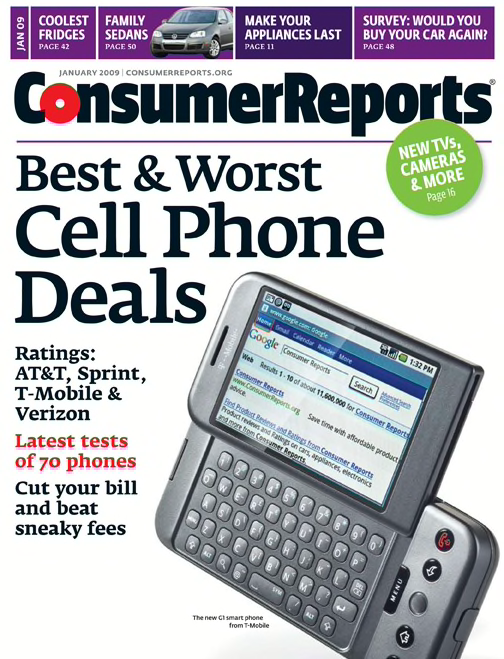
The Consumer Reports National Research Center surveyed 51,700 readers in 23 cities to determine customer satisfaction with cell-phone service providers. Verizon is a stand-out carrier for most people. The company received high marks in overall satisfaction and customer service, and service is available in most of the country. Alltel also stood out in areas where it was rated. (At press time, Verizon was awaiting approval to acquire Alltel). Additionally, T-Mobile was statistically on par with the top carriers in almost two-thirds of the cities where it was rated.
Consumer Reports’ readers reported less onerous contract terms, and this year, noted fewer problems with call quality. For the first time, Consumer Reports’ also rated customer service satisfaction and found the carriers that stood out in city-by-city Ratings of reader satisfaction and connectivity also tended to do well in customer service.
Less Complaints
In this survey, Consumer Reports’ readers complained less than they have in the past about problems with connectivity, the ability to widely receive service that’s free of static and dropped calls. They were also less likely to cite the automatic extension of their cell-phone contract as a result of changing their service as a top complaint. Consumer Reports notes that all of the cell-phone carriers have stopped automatically extending contracts when consumers make changes to their service plan. Additionally, all but Alltel reduce early-termination fees of $175 to $200 as the contract term progresses.
Cost Still a Concern
The top complaint for 14 percent of readers was the high cost of cell phone service. Consumer Reports’ analysis of the carrier’s pricing uncovered a cost-cutter consumers might not be aware of – pay-by-the-minute, or prepaid, service which is offered by all major carriers as well as providers such as Virgin and TracFone. While major carriers make no secret of their prepaid plans, which require no contract agreement, traditional plans are so lucrative that carriers have little reason to promote prepaid.
Free Phone Might Not Be So Free
Consumers may find regular plans appealing because of their apparent inclusion of a “free” or deeply discounted phone as an incentive to sign a contract, which isn’t required with prepaid plans. However, Consumer Reports recent investigation of cell-phone contracts revealed that consumers usually end up repaying the claimed savings on their phone. Cellular companies recoup their up-front phone subsidies through charges built into the monthly service fee over the one- to two- year term of the contract. For example, about $4.50 of an average Sprint subscriber’s monthly bill in 2007 was devoted to repaying the carrier for the cost of its equipment subsidies, based on data contained in the company’s required filings with the Securities and Exchange Commission. Additionally, once the handset subsidy has been paid back, the monthly service bill doesn’t decrease by the amount of the subsidy repayment. Consequently, consumers continue paying for the phone as long as they hold onto it.
Five Ways to Cut Cell Bills
As consumers look for ways to cut down on the high costs of cell service, Consumer Reports offers these five tips:
The January 2009 issue of Consumer Reports also includes Ratings of 70 standard and smart phones and eight Bluetooth headsets. The report also features of guide on how to buy a prepaid phone. Portions of the report are available for free online at www.ConsumerReports.org.