Obesity
print Print


Text Label
Text minus
Text plus
What is obesity?

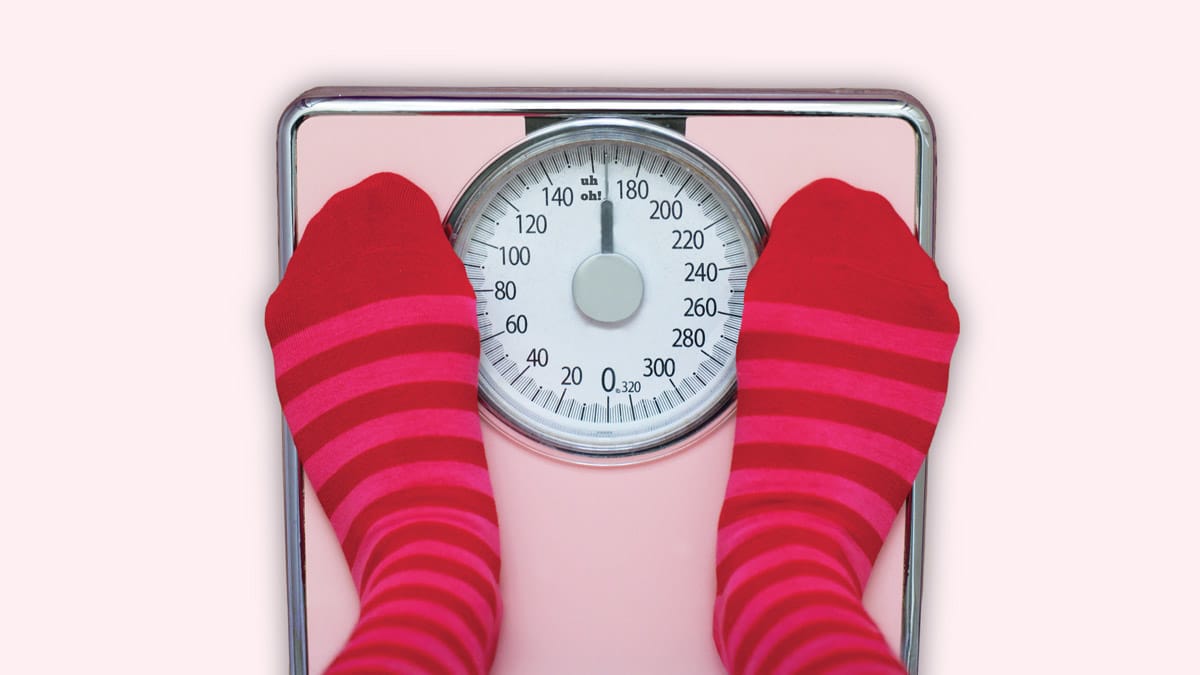
If you're obese, it means you weigh much more than is healthy for you. It happens because you eat more calories than your body uses. The extra calories are stored as fat.

Being obese is more than being just a few pounds overweight. Obesity can cause health problems such as


diabetes
Diabetes is a condition that causes too much sugar to circulate in your blood. It happens when your body stops making a hormone called insulin (type 1 diabetes) or when insulin stops working (type 2 diabetes).


diabetes,


high blood pressure
Your blood pressure is considered to be high when it is above the accepted normal range. The usual limit for normal blood pressure is 140/90. If either the first (systolic) number is above 140 or the lower (diastolic) number is above 90, a person is considered to have high blood pressure. Doctors sometimes call high blood pressure "hypertension."


high blood pressure,


arthritis
Arthritis is when your joints become inflamed, making them stiff and painful. There are different kinds of arthritis. Osteoarthritis is the most common type. It happens when the cartilage at the end of your bones becomes damaged and then starts to grow abnormally. Rheumatoid arthritis happens because your immune system attacks the lining of your joints.


arthritis and


heart disease
You get heart disease when your heart isn't able to pump blood as well as it should. This can happen for a variety of reasons.


heart disease. And it makes some people feel bad about themselves.

Obesity is more than being just a few pounds overweight. It can cause serious health problems.

See How obesity affects your life.

Losing weight isn't easy. You'll need to change the way you eat and the amount of exercise you take. But if you make these changes, you'll be healthier.

Key points about obesity
  • Obesity is a serious medical condition.
  • Losing even a small amount of weight can lower the risk to your health.
  • Cutting down on calories, taking more exercise and learning good eating habits can help you lose weight.
  • Medical treatments might also help.
  • You're more likely to lose weight if you get help from a health professional.
  • If you're very obese, surgery can help you lose a lot of weight. But there are risks with surgery so doctors usually recommend it only if your weight is a danger to your health.
What's a healthy weight?
When doctors talk about a "healthy" or "ideal" weight, they mean a weight that lowers your risk of getting serious health problems, such as heart disease or high blood pressure. It's not based on how thin you would like to look.


Source:
Sandowski SA.
What is the ideal body weight?
Family Practice. 2000; 17: 348-351.


1

Most doctors use the body mass index (BMI for short) to figure out whether you're at a healthy weight. Your BMI is a single number that's worked out from your height and weight. You can work out your own BMI.

This table shows what the different BMI scores mean.


Source:
World Health Organization.
Obesity: preventing and managing the global epidemic. Report of a WHO consultation. WHO Technical Series.
World Health Organisation, Geneva. 2000; 894: 1-253.


2


Source:
National Heart, Lung, and Blood Institute.
Clinical guidelines on the identification, evaluation and treatment of overweight and obesity in adults.
Available at http://www.nhlbi.nih.gov/guidelines (accessed 20 April 2009).


3

BMI What it means
Less than 18.5 Underweight
18.5 to 24.9 Healthy weight
25 to 29.9 Overweight
30 or greater Obese

You might have read that there are problems with using someone's BMI to find out if they're overweight. For example, an athlete who's very muscular might have a BMI that suggests they're overweight, even though they're healthy. That's because muscle is heavier than fat. However, for most people, working out their BMI is a quick and simple way of finding whether their weight is healthy. To read more, see How do doctors diagnose obesity?

How your body uses food
Food gives you energy. The amount of energy in food is measured in calories (short for kilocalories, or kcal).

Your body needs energy all the time, especially for moving and keeping warm. Different people need different amounts of energy. The amount of energy you need depends on your metabolic rate. And the more active you are, the more energy you use.

Your brain helps you stay a healthy weight. It helps to balance how much you eat with how much energy you burn.


Source:
Jequier E, Tappy L.
Regulation of body weight in humans.
Physiological Reviews. 1999; 79: 451-480.


4 Your brain sends out "hungry" or "full" signals that make you want to eat or stop eating.


Source:
Flier JS, Foster DW.
Eating disorders: obesity, anorexia nervosa, and bulimia nervosa.
In: Wilson JD, Foster DW, Kronenberg HM, et al (editors). Williams textbook of endocrinology. 9th edition. WB Saunders, Philadelphia, U.S.A.; 1998.


5

To learn more, see Why do I feel hungry or full?

What happens in obesity?
Being obese is not the same as being a few pounds overweight. Doctors say someone is obese if their BMI is 30 or higher (see the table above). For most people, having a BMI greater than 30 means they're at least 30 pounds overweight.


Source:
National Heart, Lung, and Blood Institute, and the North American Association for the Study of Obesity.
The practical guide: identification, evaluation and treatment of overweight and obesity in adults.
October 2000. Available at http://www.nhlbi.nih.gov/guidelines/obesity/prctgd_c.pdf (accessed on 20 April 2009).


6

If you're obese, it means you're eating more calories than your body is using up as energy. Your body stores the extra calories as fat.

Doctors aren't sure why some people eat more food than they need. There are probably lots of reasons.

One theory is that early humans probably had to go for long periods without food, so our bodies needed to be able to store fat easily in order to survive. But nowadays we can get food easily. Some scientists think that our bodies haven't had a chance to "catch up". They still work as if we might have to face a famine.


Source:
Peters JC, Wyatt HR, Donahoo WT, et al.
From instinct to intellect: the challenge of maintaining healthy weight in the modern world.
Obesity Review. 2002; 3: 69-74.


7

And for some people who are obese, their "full" and "hungry" signals may not work properly.

For some people, this happens because of a medical condition, or because of side effects of medications.

To read more, see Why do some people gain weight more easily than others?

"It must be my glands"
Like many people who are overweight, you might feel that you don't eat a lot. You might think that your weight problems must be due to something else, such as a "slow metabolism" or your "glands."


Source:
Flier JS, Foster DW.
Eating disorders: obesity, anorexia nervosa, and bulimia nervosa.
In: Wilson JD, Foster DW, Kronenberg HM, et al (editors). Williams textbook of endocrinology. 9th edition. WB Saunders, Philadelphia, U.S.A.; 1998.


5

Some medical conditions can make you more likely to put on weight. But you can only become obese by eating more calories than your body uses.

Medical conditions such as hypothyroidism and medications such as steroids make it more likely that you'll put on weight. Some conditions make you feel more hungry. Other conditions slow down your metabolic rate, so you use less calories. And some of these conditions affect your glands.

If you have one of these conditions, you might find it more difficult to keep your weight down. It's important to get medical help.

"But I don't eat that much"
The bad news is that you only have to eat slightly more calories than you use for the weight to add up.

  • The average American over age 25 takes in only 0.3 percent more energy than they use each day. This about 150 calories, which is the number of calories in a small soda.
  • Over time, this extra energy adds up. It's stored as fat.
  • By the age of 55, that average American has gained 20 pounds.


    Source:
    Rosenbaum M, Leibel RL, Hirsch J.
    Obesity.
    New England Journal of Medicine. 1997; 337: 396-407.


    8
If the amount of fat in your body increases gradually, your body doesn't seem to notice that you're putting on weight. Your appetite might stay the same.

Obesity and our lifestyle
There are two things about our Western lifestyle that are linked to more and more people becoming obese:

Because we're less active than people were in the past, and because fatty and sugary foods are so widely available, it's very easy to gain weight. Some doctors think it would make a difference if unhealthy foods were more clearly labeled. Others think that fast-food adverts aimed at children should be banned. These things might make it easier for people to eat a healthy diet and avoid being overweight. But you'd still need to make sure you didn't eat more calories than you needed.

Why me?
Anybody can become obese if they eat more calories than they use. But there are certain things that make this more likely. These are called risk factors. Some of these you can control, others you can't. They include having parents who are overweight or obese, getting older, being from a certain ethnic group and having emotional problems.

To learn more, see Risk factors for obesity.

Certain medical conditions and medications can also make it more likely that you'll become obese.

Sources for the information on this page:
  1. Sandowski SA.What is the ideal body weight?Family Practice. 2000; 17: 348-351.
  2. World Health Organization.Obesity: preventing and managing the global epidemic. Report of a WHO consultation. WHO Technical Series.World Health Organisation, Geneva. 2000; 894: 1-253.
  3. National Heart, Lung, and Blood Institute.Clinical guidelines on the identification, evaluation and treatment of overweight and obesity in adults.Available at http://www.nhlbi.nih.gov/guidelines (accessed 20 April 2009).
  4. Jequier E, Tappy L.Regulation of body weight in humans.Physiological Reviews. 1999; 79: 451-480.
  5. Flier JS, Foster DW.Eating disorders: obesity, anorexia nervosa, and bulimia nervosa.In: Wilson JD, Foster DW, Kronenberg HM, et al (editors). Williams textbook of endocrinology. 9th edition. WB Saunders, Philadelphia, U.S.A.; 1998.
  6. National Heart, Lung, and Blood Institute, and the North American Association for the Study of Obesity.The practical guide: identification, evaluation and treatment of overweight and obesity in adults.October 2000. Available at http://www.nhlbi.nih.gov/guidelines/obesity/prctgd_c.pdf (accessed on 20 April 2009).
  7. Peters JC, Wyatt HR, Donahoo WT, et al.From instinct to intellect: the challenge of maintaining healthy weight in the modern world.Obesity Review. 2002; 3: 69-74.
  8. Rosenbaum M, Leibel RL, Hirsch J.Obesity.New England Journal of Medicine. 1997; 337: 396-407.
This information was last updated on May 01, 2009
BMJ Group
This information is for educational use only, and is not a substitute for prompt professional medical advice. Readers should always consult a physician or other professional for advice and treatment.
© BMJ Publishing Group Limited 2009. All rights reserved.
Next in this section: What are the symptoms?