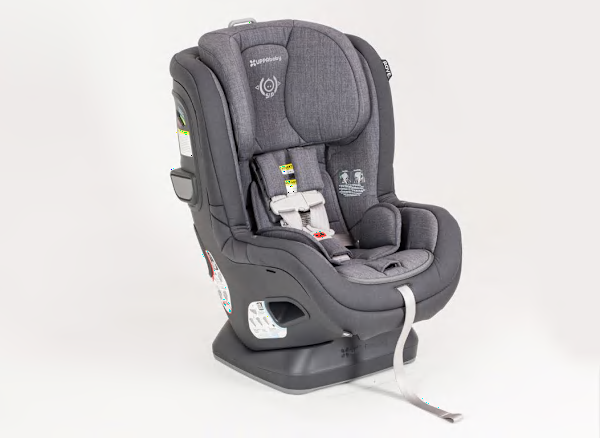
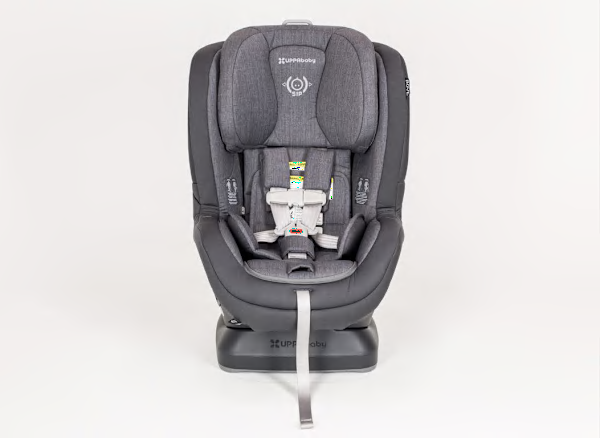
Ease of use: The UPPAbaby Rove convertible car seat offers parents and caregivers clear labeling and generally easy-to-follow belt paths for installation. But the overall design of the car seat makes installation tricky: the rubber foot on the bottom of the seat creates serious friction on leather vehicle seats, and the Rove’s bulky profile can make maneuvering it into a tight backseat very difficult.
Fit-to-vehicle LATCH: Installing the UPPAbaby Rove in the forward-facing position using the LATCH system was fairly simple on paper, though in many cases, it was necessary to remove the vehicle’s backseat headrest so that the car seat shell could sit flush with the vehicle seat, and the grippy rubber bottom can be difficult to work with. The wide base also proved difficult when installing the Rove in rear-facing position with LATCH, as it interferes with the LATCH anchors in some cars. We also found that installing the Rove in the backseat of some cars made the adjacent seats unusable due to the wide base.
Fit-to-vehicle Belt: Installing the UPPAbaby Rove with a seatbelt proved difficult in several vehicles, in both rear-facing and forward-facing. The rear-facing belt path was narrow, though well marked, but took a great deal of effort to tighten and adjust, even with the lock-off. Forward-facing installation requires the harness to be adjusted to the top-most position for installation, and several seat pads to be held out of the way to properly route and secure the seat belt. You might want to enlist a partner or friend to help.
Crash protection: In CR’s crash test protocol, the UPPAbaby Rove performed very well and did not exhibit significant structural integrity issues.