Media Room
Consumer Reports Investigation Reveals Uber and Lyft AI-Driven Pricing Tactics Lead to Significantly Different Prices
The Consumer Reports investigation raises concerns about AI-driven pricing tactics, prompting calls for regulatory intervention.
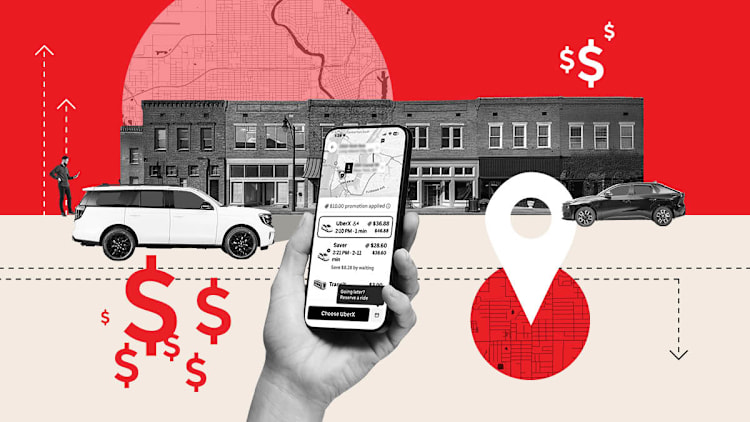
YONKERS, NY – A new investigation by Consumer Reports (CR), the 90-year-old nonprofit research, testing, and advocacy organization, has uncovered that Uber and Lyft leverage AI-driven pricing tactics to routinely charge different customers significantly different prices for rides ordered within a few minutes of each other, specifically within six minutes of each other. This comprehensive investigation stems from consumer complaints and real-life observations, and highlights the pervasive issue of opaque pricing algorithms designed to optimize revenue by extracting more money from consumers.
What This Means for Consumers and the Ride-Hailing Market
- Significant Price Discrepancies: CR’s investigation revealed dramatically different prices for the same Uber and Lyft rides at similar times. We define the same ride as a trip from the same starting point to the same ending point priced at almost the same time—generally within a few minutes of one another and, in many cases, within the same minute.
- The median difference between the lowest and highest price groupings across tested routes was 42.4 percent.
- Widespread Difference in Discounts: Both apps also regularly entice customers to book rides by offering supposed discounts off what appeared to be inflated original prices, a practice that experts say not only is deceptive and manipulative but also may violate several states’ consumer-protection laws. We found that 12.4 percent of all discounts advertised on both platforms fell into this category. We believe these discounts to be fake.
- Erosion of Trust: The algorithmic pricing opacity makes it nearly impossible for consumers to comparison shop or understand the justification for price variations, creating a lack of transparency and trust in the ride-hailing market.
“People expect prices to change when demand spikes. What they don’t expect is for two customers taking the same ride at the same time to be charged very different amounts, or to be shown discounts that may not be discounts at all, said Phil Radford, President and CEO of Consumer Reports. “The solution is straightforward: companies should be required to clearly explain how prices are set and ensure that advertised discounts are genuine, so people can comparison shop and know they’re being treated fairly.”
The Comparison Shopping Challenge.
Uber and Lyft are pioneers in “dynamic” and “surge” pricing, where prices fluctuate based on real-time supply and demand. However, CR’s investigation differentiates the tactics observed in the tests from traditional dynamic pricing:
- More than Dynamic Pricing: The pricing tactics observed in our Uber and Lyft tests differ from dynamic or surge pricing because volunteers booked rides within a few minutes of one another and, in many cases, within the same minute.
- Algorithmic Black Box: Both companies use complex algorithms and AI to rapidly set prices. This creates a black box effect, preventing consumers from understanding price determinants and hindering price comparisons. Uber and Lyft maintain that they do not use personal data to set base prices but acknowledge its use for discounts and promotions.
Key Findings from Consumer Reports’ Investigation
- Universal Price Variation: All 30 routes tested across the U.S. showed at least two different price groupings; many had more.
- One route in Kansas City, Missouri, generated 29 different prices for 55 potential customers for the same ride at the same time. Another route with 10 airport trips in Portland, Oregon, yielded eight different prices for the same trip at similar times.
- Fake Discounts: About 50 percent of upfront prices supposedly reflected a discount, but 12.4 percent of these were found to be fake based on what appeared to be inflated original prices.
- Driver Compensation Concerns: CR’s analysis showed that Uber and Lyft retain between 43% and 49.5% of each fare, a percentage that has grown as drivers’ shares have reportedly decreased. A nationally representative CR survey of 2,183 U.S. adults in April 2026, shows that a majority of Americans think rideshare drivers should keep most or all of the additional fare from a ride affected by surge pricing.
Consumer Reports’ Testing Methodology
The CR investigation examined advertised offers and promotions for both Uber and Lyft before rides were ordered and paid for in March and April 2026. Tests were specifically designed to minimize variables like time-based dynamic pricing by having volunteers price the same routes at roughly the same times. The investigation included:
- Virtual Testing: Volunteers checked prices for select routes across 17 states, recording and comparing price quotes for the same trips.
- In-Person Testing: A first-of-its-kind test, where riders matched with a pre-selected pool of drivers. CR then compared receipts from both riders and drivers to determine fare distribution and company take-rates.
Pricing Tactics Draw Criticism from Consumers and Lawmakers
Algorithmic and AI-driven pricing tactics are attracting growing attention and criticism from consumers, lawmakers, and regulators alike. A CR investigation on Instacart found that the company used AI-enabled software to group customers and charge them different prices for the same products at some of the nation’s largest grocery stores. This year, Connecticut and Maryland became the first states in the U.S. to ban certain forms of personalized pricing, and other states are considering similar measures.
Learn More
- Read the Full CR Investigation: Different Prices for the Same Ride: How Uber and Lyft Use AI to Get More Money Out of You
- Join the Action: Urge the FTC and state attorneys general to investigate Uber and Lyft’s pricing tactics and advocate for a fairer, more transparent ride-hailing marketplace at CR.org/ridesharepricing.
Media Contacts
Elmer Guardado
About Consumer Reports
Founded in 1936, CR has a mission to create a fair and just marketplace for all. Widely known for our rigorous research and testing of products and services, we also survey millions of consumers each year, report extensively on marketplace issues, and advocate for consumer rights and protections around safety as well as digital rights, financial fairness, and sustainability. CR is independent and nonprofit.
© 2026 Consumer Reports. The material above is intended for legitimate news entities only; it may not be used for advertising or promotional purposes. Consumer Reports® is an expert, independent, nonprofit organization whose mission is to work side by side with consumers to create a fairer, safer, and healthier world. We accept no advertising and pay for all the products we test. We are not beholden to any commercial interest. Our income is derived from the sale of Consumer Reports® magazine, ConsumerReports.org® and our other publications and information products, services, fees, and noncommercial contributions and grants. Our Ratings and reports are intended solely for the use of our readers. Neither the Ratings nor the reports may be used in advertising or for any other commercial purpose without our prior written permission. Consumer Reports will take all steps open to it to prevent unauthorized commercial use of its content and trademarks.